
Sitemap
A list of all the posts and pages found on the site. For you robots out there, there is an XML version available for digesting as well.
Pages
Hello there!
Archive Layout with Content
Posts by Category
Posts by Collection
CV
Markdown
Page not in menu
Page Archive
ABOUT ME
RESEARCH
Sitemap
Posts by Tags
Talk map
CONTACT
TEACHING
Terms and Privacy Policy
Blog posts
Jupyter notebook markdown generator
Posts
Future Blog Post
This post will show up by default. To disable scheduling of future posts, edit config.yml and set future: false.
Blog Post number 4
This is a sample blog post. Lorem ipsum I can’t remember the rest of lorem ipsum and don’t have an internet connection right now. Testing testing testing this blog post. Blog posts are cool.
Blog Post number 3
This is a sample blog post. Lorem ipsum I can’t remember the rest of lorem ipsum and don’t have an internet connection right now. Testing testing testing this blog post. Blog posts are cool.
Blog Post number 2
This is a sample blog post. Lorem ipsum I can’t remember the rest of lorem ipsum and don’t have an internet connection right now. Testing testing testing this blog post. Blog posts are cool.
Blog Post number 1
This is a sample blog post. Lorem ipsum I can’t remember the rest of lorem ipsum and don’t have an internet connection right now. Testing testing testing this blog post. Blog posts are cool.
portfolio
In my free time, I enjoy volunteering and giving back to my community through various meaningful activities. I am also passionate about performing, such as theatre, and visual arts, such as painting and crafting. These activities help me to express my creativity and connect with others. Additionally, I love traveling, hiking, and practicing mindful running, all of which help me stay connected to nature and find balance.
Volunteering
In January 2018, I co-founded Opera APS, a Circolo ARCI and cultural center that uses dance and art therapy to support individuals facing psychological challenges. The same year, I joined Libera. Associazioni, Nomi e Numeri contro le Mafie as a volunteer. Libera is a nationally recognized association working on raising awareness about the threats posed by Mafia in Italy. I also volunteered and took part in projects to restore Mafia-confiscated properties in the South of Italy. 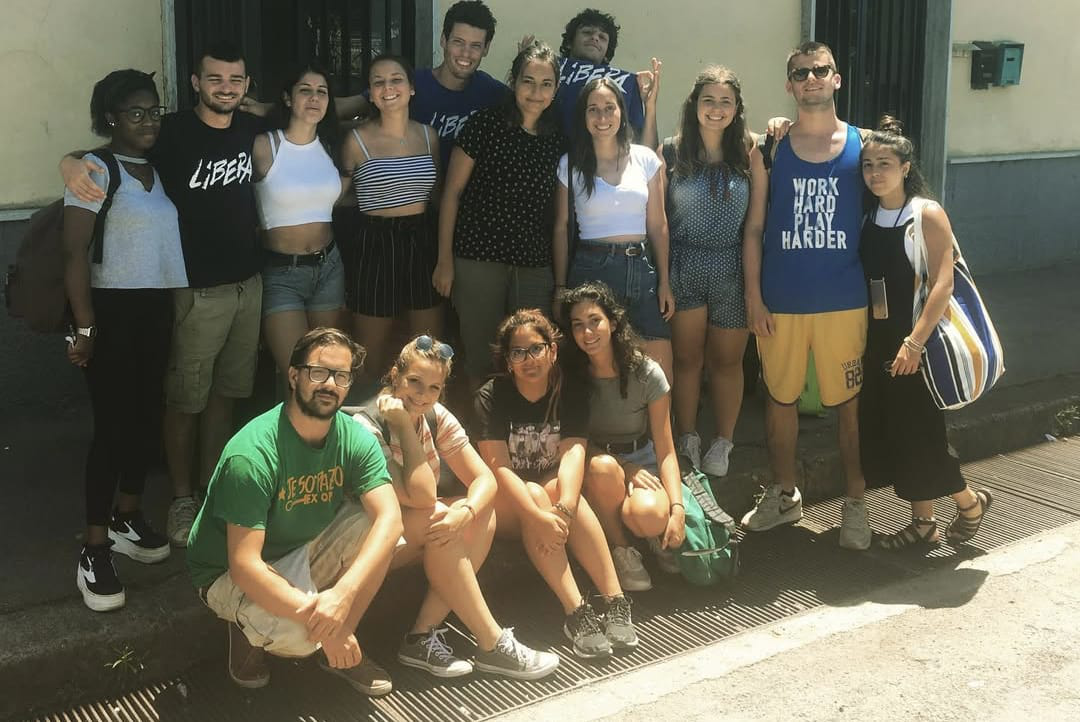
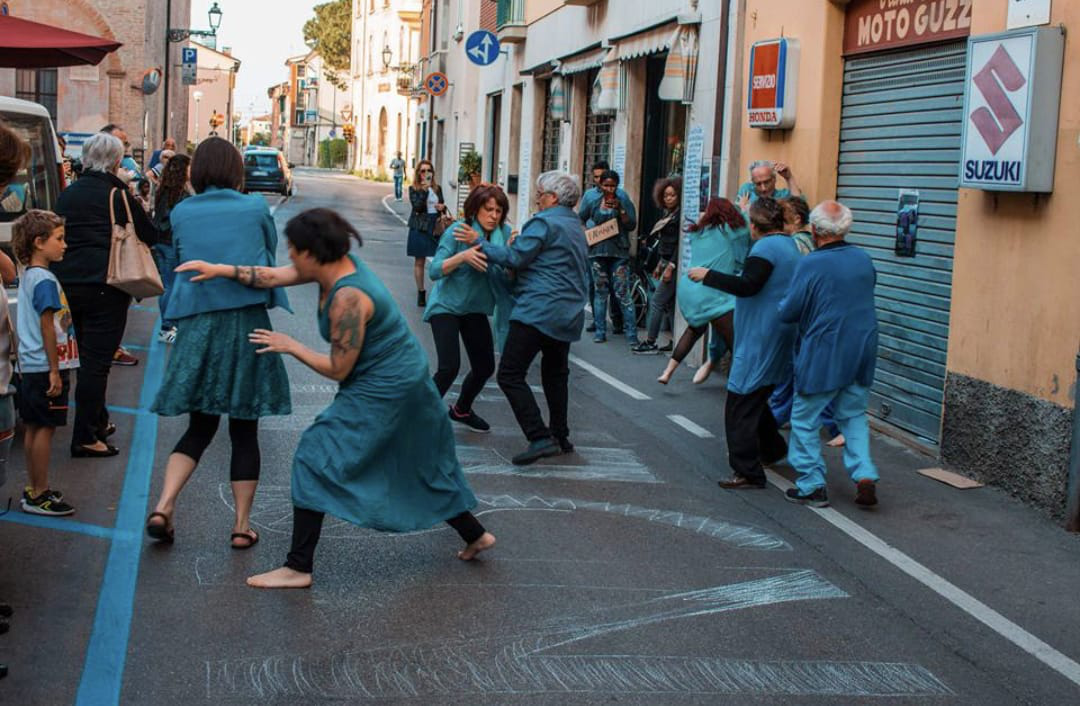
Visual and Performing Arts
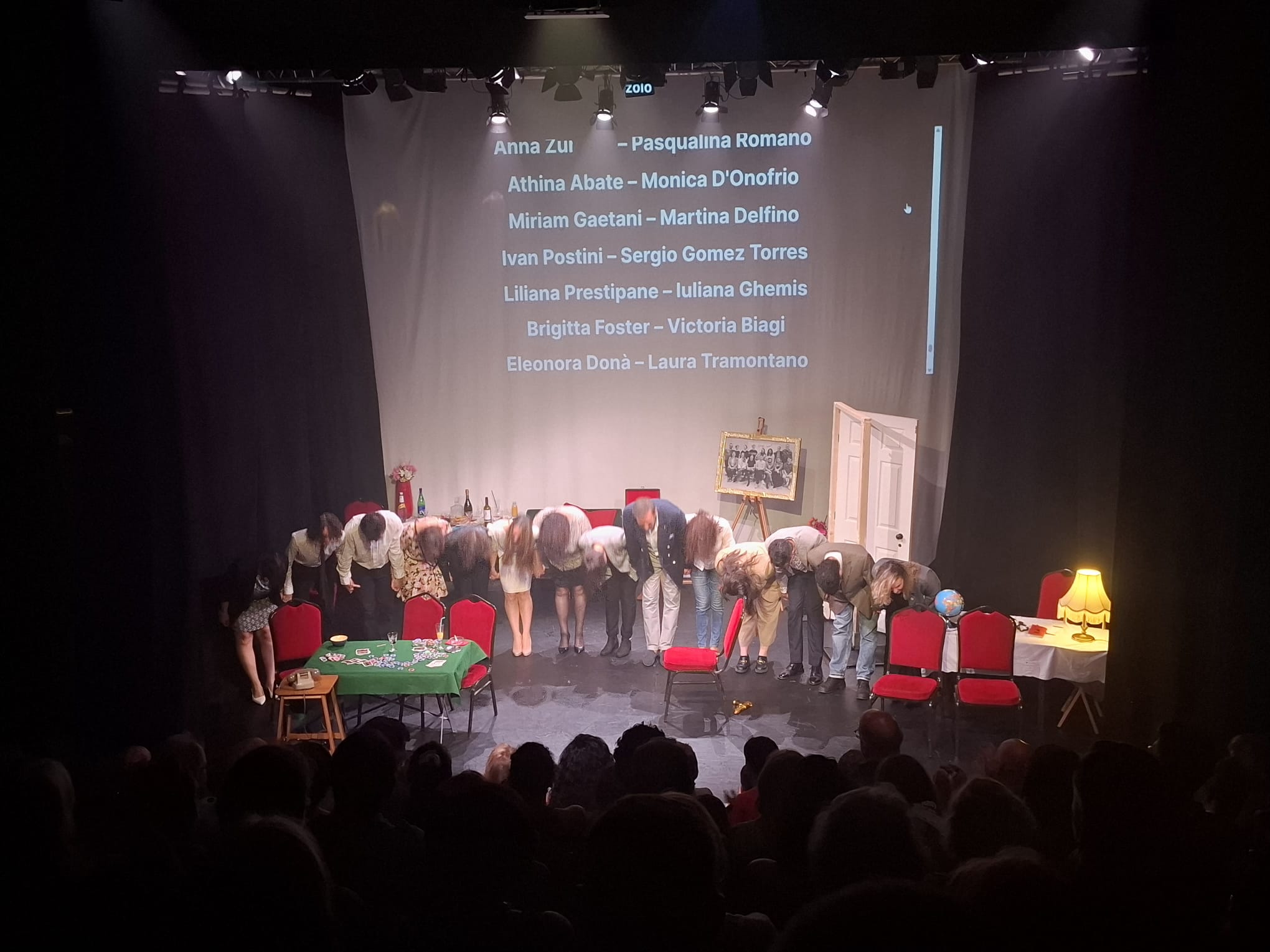
I enjoy painting as a hobby, using it as a way to express my creativity. I also joined a theatre group in 2023 and performed a comedy twice in the last year. 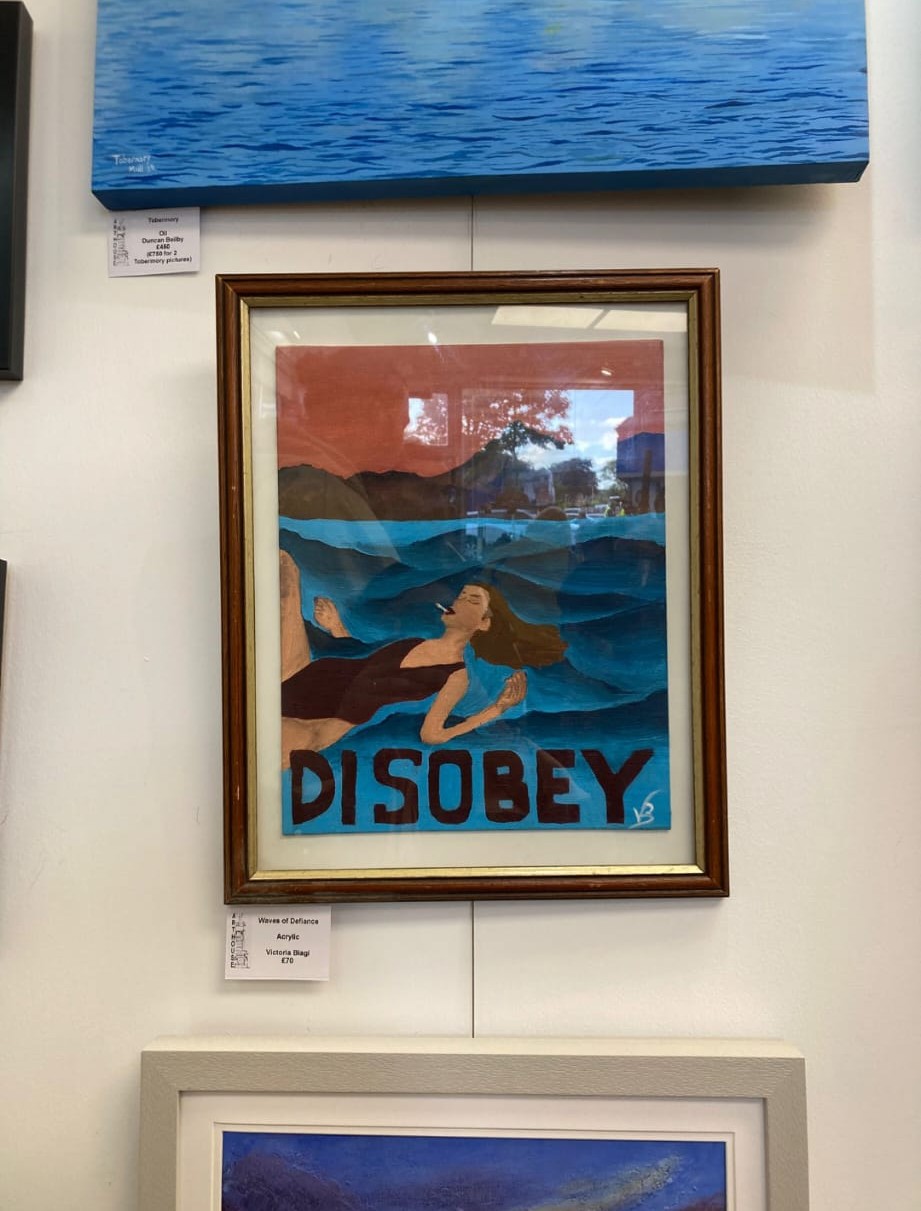
publications
Another Brick in the Wall? The Educational Effects of Repurposed Mafia Properties
Presented at: NWSSDTP conference (Lancaster University, 2024) - AMBS Doctoral Conference (University of Manchester, 2024) - CLEAN Unit (Bocconi University, 2024) - Women in State Capacity Conference (Oxford Martin School, 2025) - AYEW Online Seminars (2025) - UniMi-JEM 4th Junior Economics Meeting (University of Milan, 2025) - 9th Workshop on the Economics of Organised Crime (University of Edinburgh, 2025) - Workshop on Economics of Education (KU leuven, 2025) - SAEe (Barcelona, 2025) - Milan PhD Workshop (Bocconi University, 2026 scheduled) - RES (University of Newcastle, 2026 scheduled) - EEA (University College Dublin, 2026 scheduled)
Abstract: Italy’s anti-Mafia legislation allows confiscated Mafia properties to be converted into educational, cultural, and welfare facilities where local NGOs offer various social activities specifically targeting youth and other vulnerable groups. This study provides the first causal estimation of how exposure to these repurposed spaces affects students’ dropout rates by changing their attitudes toward educational and criminal pathways. Using school-level geo-referenced data from 2015 to 2022 and exploiting the staggered timing of property reuse, I investigate changes in local dropout rates. Results reveal a significant reduction in dropout rates of approximately 34% relative to the mean for students near repurposed properties. I show that these facilities reshape students’ beliefs, reducing the appeal of Mafia networks while increasing the value of formal education. The effects are not explained by gentrification, additional educational support, or civic engagement levels.
Murder in the Marketplace
with Zachary Porreca and Alexander Cardazzi - Public Choice, 2026
Beyond the Checkout: The Unseen Effects of Shopping Malls Expansion on Social Capital in Rural Italy
with Bruno Martorano
The Unintended Political Consequences of Expanding Police Authority: Evidence From London
with Enrico Cavallotti and Abhinav Khemka
Presented at: CLEAN Unit Winter Workshop (Bocconi University, 2024) - NWSSDTP Doctoral Conference (Manchester, 2025)
Abstract: Policies expanding police discretionary authority are widespread and politically contested, yet their effects on police behaviour, institutional trust, and political preferences remain poorly understood. We study Britain’s 2014 Anti-Social Behaviour, Crime and Policing Act, which authorised local councils to implement Public Space Protection Orders (PSPOs), prohibiting broadly defined anti-social activities and expanding officer discretion in designated areas. Using the first comprehensive dataset on PSPO implementation across London census tracts (2016–2024), linked to crime records, stop-and-search data, and electoral outcomes, we exploit PSPOs’ staggered adoption to identify causal effects. These policies increase unproductive police stop-and-search activity, disproportionately targeting non-white residents. Reported anti-social behaviour and other crimes remain unaffected. These findings suggest that vaguely defined discretionary enforcement tools can generate racially unequal policing without delivering the public order benefits that justify their adoption.
Mafia and Social Order
with Giuseppe De Feo and Giacomo De Luca
Presented at: Administrative Data Workshop (University of Liverpool, 2024) - Second City History and Economics Meeting (University of Birmingham, 2025)
Abstract: Mafia groups have been developing their power and local control over Sicily since the 19th century by enforcing an alternative institutional system with its own laws. In this paper, we test the historical effect of the Mafia on the legal judiciary as an alternative mechanism of conflict resolution. Under an IV approach, we find that the presence of the Mafia reduces the number of lawyers and the number of civil sentences at the tribunal level.
The Impacts of Relational and Restorative Practice in School
with Emilia Del Bono and Angus Holford and Luca Favero and Paul Garcia</span> </p></article> </div> Institutional email: vb26722@essex.ac.uk - vbiagi@liverpool.ac.uk Academic year 2023/2024 ECON121 - Principles of Microeconomics Seminar leader Academic year 2024/2025 ECON112 - Statistics for Economics and Business Students ECON123 - Principles of Macroeconomics Seminar leader Academic year 2025/2026 Stats@Tutor at Sidney Johns Librarytalks
Email
Personal email: viki.victoria99@gmail.comteaching
University of Liverpool